
Automated Decision-Making Privacy: The 2026 Deadline
Automated decision-making privacy obligations reach Australian organisations on 10 December 2026, and most privacy policies are nowhere near ready. From that date, any organisation covered by the Privacy Act 1988 must explain where computer programs use personal information to make decisions that significantly affect people. Consequently, the mapping work needs to start now rather than in November.
Last updated on July 23, 2026
Why This Obligation Caught Australian Organisations Off Guard
Automation Arrived Quietly
Most organisations did not hold a board meeting about adopting automated decision-making. Instead, the capability arrived feature by feature. A recruitment platform added candidate ranking. An insurance system began scoring applications. Meanwhile, a rostering tool started allocating shifts using historical performance data.
Because each step felt small, nobody recorded a decision point. As a result, very few Australian organisations can currently produce a list of every system that uses personal information to shape an outcome about a real person. That list is precisely what the new obligation now demands.
The Reform Landed Two Years Before It Bit
The Privacy and Other Legislation Amendment Act 2024 received Royal Assent on 10 December 2024. However, the transparency obligation attached to automated decisions was given a two-year lead time. Many organisations noted the date, filed it, and moved on.
That gap is now closing fast. Furthermore, the Office of the Australian Information Commissioner released its issues paper and opened consultation on guidance during 2026, which means final guidance may arrive with only weeks to spare. Organisations waiting for perfect clarity will be drafting disclosures under pressure.
Policy Documents Are Not the Hard Part
Writing a paragraph for a privacy policy takes an afternoon. Discovering what that paragraph should honestly say takes considerably longer. In practice, the difficulty sits in system discovery, vendor questioning, and getting three separate teams to agree on what the software actually does.
Crucially, the disclosure must be accurate. A vague statement that satisfies nobody creates more regulatory exposure than a specific one, because it signals that the organisation never did the underlying work.
Executive Summary
- What this blog covers: The automated decision-making transparency obligation commencing 10 December 2026, what it requires in your privacy policy, and how to prepare your systems and your people.
- Who it’s for: Australian compliance officers, privacy officers, HR leaders, company secretaries, and executives who own governance for software that touches personal information.
- Key regulatory context: New Australian Privacy Principle 1 obligations introduced by the Privacy and Other Legislation Amendment Act 2024, overseen by the Office of the Australian Information Commissioner.
- The central risk: Organisations cannot disclose what they have not mapped, and most have no register of the automated tools already making consequential decisions.
- Primary action required: Build a complete automated decision register now, then train the staff who will field questions once the disclosure goes live.
What the Automated Decision-Making Privacy Rule Actually Requires
Defining an Automated Decision
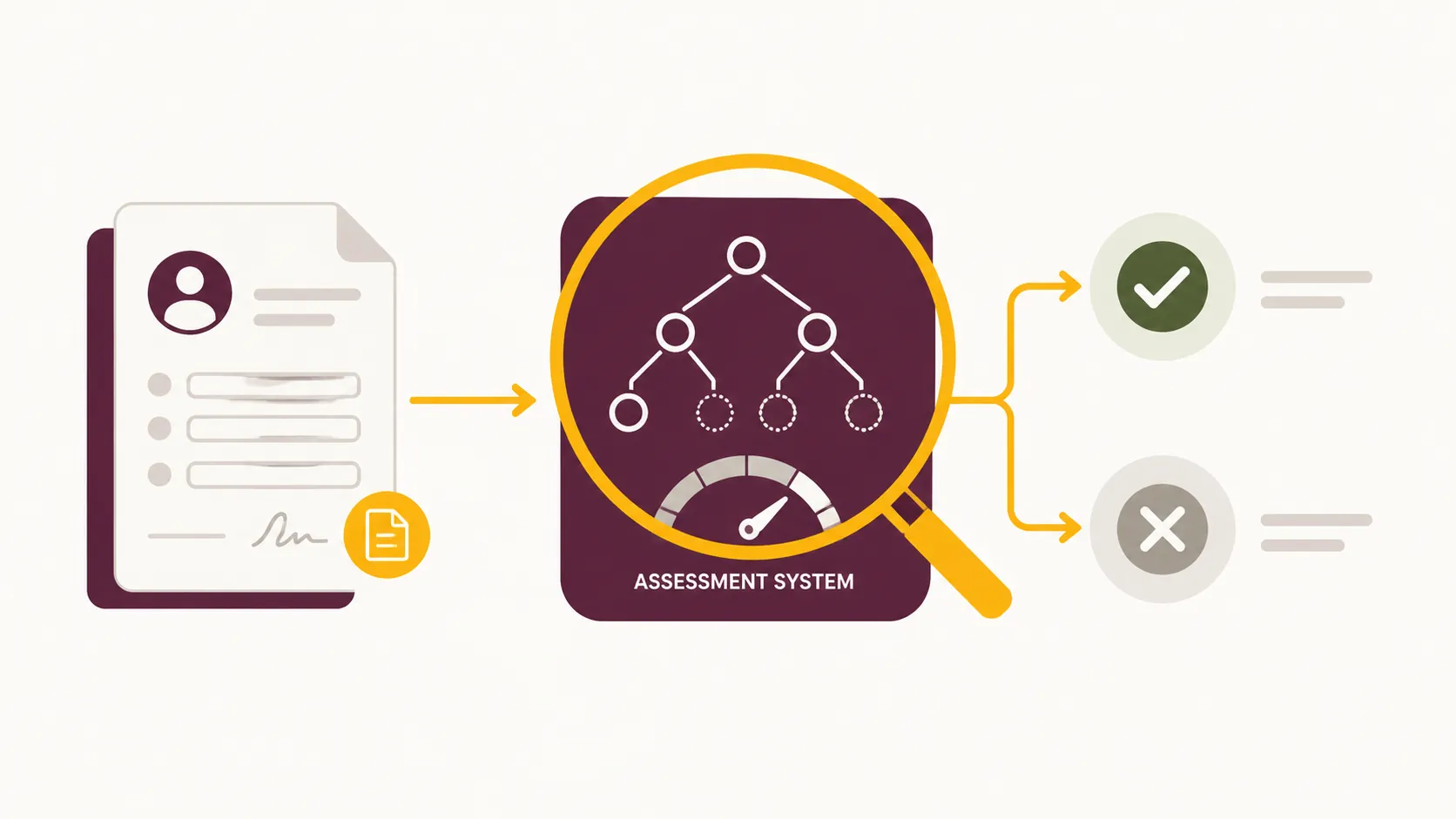
The obligation applies where an organisation has arranged for a computer program to use personal information to make a decision, or to do something substantially and directly related to making that decision, where the outcome could reasonably be expected to significantly affect an individual’s rights or interests. Notably, the drafting is technology-neutral. Machine learning models, rule-based scripts, and automated scoring tools all fall inside the same net.
What Must Appear in Your Privacy Policy
From 10 December 2026, an affected privacy policy needs to set out specific information rather than a general acknowledgement that technology exists. Accordingly, expect to describe the following elements in plain language:
Each item below should be answerable from your own records, not from a template downloaded elsewhere:
- The kinds of personal information used by the computer program in making or assisting the decision.
- Which categories of decisions are made, or substantially assisted, through automated means.
- How, in general terms, the automated process contributes to the outcome.
- Where a human reviews, overrides, or simply signs off on the machine’s output.
- Clear contact routes for individuals who want to query a decision affecting them.
How to Decide Whether a System Is In Scope
Teams often stall on the significance test. Therefore, use a short decision sequence instead of debating definitions in the abstract. Ask whether the tool uses personal information, then whether the outcome changes someone’s money, employment, housing, access, or legal standing.
Regulatory guidance and commentary point consistently toward the same high-risk categories. In particular, contrast the two groups below when triaging your inventory:
- Likely in scope: Credit assessment, insurance pricing and eligibility, candidate screening and ranking, tenancy application scoring, benefit or service eligibility, fraud flagging that blocks a transaction.
- Likely in scope, but frequently missed: Automated shift allocation, performance ranking, dynamic pricing tied to an identified customer, and risk scores that route a person into a different process.
- Usually out of scope: Spell-checking, spam filtering, aggregate analytics with no individual outcome, and internal reporting that informs strategy rather than a decision about a named person.
- Genuinely uncertain: Recommendation engines and chatbots that shape choices without formally deciding anything. Document your reasoning either way, because a recorded judgement defends far better than silence.
A Disclosure Duty, Not a Prohibition
Nothing in the reform bans automated decision-making. Rather, it requires honesty about where automation sits inside consequential processes. Organisations may continue using every tool they currently rely on.
Ultimately, that framing matters for internal buy-in. Technical teams resist compliance conversations when they expect a ban. By contrast, they engage readily when the ask is documentation and clear explanation.
Why Most Organisations Are Behind Schedule
Shadow Automation Sits Outside the Register
Compliance teams typically know about the enterprise platforms. Meanwhile, the harder problem lives in the gaps between them. Several patterns recur across Australian organisations:
- Vendor software that quietly enabled an AI feature during a routine update.
- Spreadsheets with embedded scoring formulas that a single team member built years ago.
- Third-party screening services engaged directly by a hiring manager without procurement review.
- Workflow automations built inside collaboration tools by staff with no privacy training.
Nobody Owns the Question
Privacy sits with legal or the company secretary in many organisations. However, the systems sit with IT, while the decisions sit with HR, credit, or operations. That split produces predictable paralysis.
Each function assumes another has the register. Consequently, no register exists at all. Furthermore, the person who eventually inherits the task usually lacks authority to compel answers from vendors or from other departments.
Australian governance teams already understand this pattern from work health and safety. Under the WHS Act 2011, officer due diligence requires officers to acquire knowledge of hazards and to verify that resources and processes exist. Privacy governance now demands the same posture of active verification rather than passive assumption.
Vendors Do Not Volunteer the Detail
Suppliers rarely publish the internals of their scoring logic. Instead, marketing material describes outcomes while contracts stay silent on mechanics. Organisations therefore need to ask directly, in writing, and early enough to escalate when answers do not arrive.
- Which personal information fields does the product use as inputs?
- Does the system produce a score, a ranking, a recommendation, or a final decision?
- Can a human meaningfully override the output, and does your audit log capture that override?
- What documentation can you provide that we may summarise in a public privacy policy?
Silence from a vendor is itself useful information. Moreover, it belongs in your risk register alongside the system it relates to.

The Australian Legal and Regulatory Context
How the Reforms Roll Out in Stages
The Privacy and Other Legislation Amendment Act 2024 did not land as a single switch. Rather, it staged its changes across several years. A statutory tort for serious invasions of privacy commenced during 2025, giving individuals a direct avenue where none previously existed. The automated decision transparency obligation follows on 10 December 2026.
Additional reform remains under discussion. Specifically, the small business exemption for organisations with annual turnover of $3 million or less still applies today, though government has signalled its removal in a later tranche. Smaller organisations should therefore treat current preparation as an investment rather than an exemption.
What the Regulator Is Signalling
Enforcement posture shifted noticeably during 2026. In January, the Office of the Australian Information Commissioner launched its first privacy policy compliance sweep, examining roughly 60 organisations across six sectors where personal information is routinely collected face to face:
- Real estate agencies, which increasingly use automated tenancy screening.
- Pharmacies and chemists handling sensitive health information.
- Licensed venues operating identity scanning at entry.
- Car rental businesses and dealerships running credit and identity checks.
- Pawnbrokers and second-hand dealers subject to identification requirements.
Notably, the sweep assessed privacy policies against Australian Privacy Principles 1.3 and 1.4, which require a clearly expressed and current policy. That is proactive auditing rather than complaint-driven investigation, and it applies well beyond the six sectors named.
The Penalty Framework Behind the Obligation
Serious or repeated interferences with privacy attract civil penalties reaching $50 million for bodies corporate, with alternative calculations based on benefit obtained or adjusted turnover. Additionally, the reforms created lower tiers with infringement notices of up to $66,000 for certain administrative contraventions.
Regulators seldom reach for the maximum. Nevertheless, the tiered structure means that a missing or misleading privacy policy statement now carries a defined price rather than a vague reputational cost. Safe Work Australia data on WHS enforcement shows a similar pattern in adjacent regulation: penalties rise sharply once a duty holder ignores a published, well-signposted deadline.
Leadership, Behaviour, and Who Actually Answers the Question
Officer Due Diligence Transfers Directly
Australian officers already carry a personal due diligence duty for work health and safety. That duty rests on acquiring knowledge, understanding operations and hazards, and verifying that resources exist. Privacy governance rewards exactly the same discipline, and boards recognise the language immediately.
- Ask for the automated decision register by name at the next board or executive meeting.
- Require a named owner rather than a committee for the December disclosure.
- Test one system end to end, because a single worked example exposes gaps faster than a status report.
- Confirm that procurement now flags automated decision capability before contracts are signed.
Frontline Staff Face the Consequences First
Publication changes the questions your people receive. A rejected applicant who reads that automated screening informed the outcome will ask what happened. Similarly, a declined customer will want to know which information mattered.
Staff without preparation improvise. In practice, improvised answers generate complaints, and complaints generate regulator attention. Training therefore functions as a control, not as an optional extra:
- Recognising when a query relates to an automated decision rather than a general privacy question.
- Explaining the process accurately without overstating human involvement.
- Escalating promptly to the accountable owner when a person disputes an outcome.
- Recording the interaction so patterns surface before they become systemic problems.
Culture Determines Whether the Register Stays Accurate
Registers decay quickly. New tools appear, features change, and vendors update logic without announcement. Ultimately, accuracy depends on whether staff believe raising a new system is welcome rather than inconvenient.
Organisations that punish disclosure get silence. By contrast, organisations that thank the person who flags a quietly enabled AI feature keep their register alive between formal reviews.
Policy-as-Written Versus Decision-as-Made
The Gap That Creates Regulatory Exposure
Every organisation runs two versions of its processes. Policy-as-written lives in documents, describing careful human judgement supported by tools. Decision-as-made lives in daily practice, where time pressure and volume push people toward accepting whatever the system suggests.
Automated decision transparency sits precisely on this fault line. Your privacy policy will describe one of these versions. Regulators, complainants, and courts will examine the other.
Crucially, the risk is not that organisations lie. Rather, the risk is that they describe their intended process honestly while never checking whether reality matches it.
Where the Two Versions Diverge
Divergence follows recognisable patterns across Australian organisations. Specifically, watch for these signals when validating a proposed disclosure:
- Human review exists formally, yet override rates sit near zero across thousands of decisions.
- Reviewers see only the score, never the underlying information that produced it.
- Turnaround targets make genuine review arithmetically impossible.
- Staff describe the tool as “the decision”, while policy describes it as “a recommendation”.
Closing the Gap Before You Publish
Testing beats assuming. Pull a sample of recent decisions and trace each one from input to outcome, then compare what happened against your draft disclosure wording. Adjust the wording, or adjust the process, until both align.
Moreover, this exercise usually improves the underlying process. Teams discover reviewers without context, thresholds nobody remembers setting, and escalation paths that lead nowhere. Fixing those problems delivers value well beyond the December deadline.
The eCompliance Central Automated Decision Transparency Framework
Preparation benefits from sequence. The seven steps below move from discovery through to maintenance, and each one produces an artefact you can show a regulator. Organisations starting in mid-2026 have adequate time, provided they begin with mapping rather than with drafting.
A Seven-Step Framework for Control
Map Every Automated Touchpoint
Build a single register of every tool that touches personal information and influences an outcome. Include spreadsheets, vendor platforms, and quiet AI features inside software you already licence.
Test Significance, Not Technology
Ask whether the outcome changes someone’s money, job, housing, or access. Rule-based scripts count exactly as much as sophisticated machine learning models.
Interrogate Your Vendors Early
Send suppliers a short written question set covering inputs, logic, and human review points. Record every answer, because your public disclosure depends on their accuracy.
Name One Accountable Owner
Give a single senior person clear ownership of the register and the disclosure. Shared ownership across IT, HR, and legal reliably produces no ownership at all.
Draft Plain-Language Disclosure
Write the privacy policy section in words a customer would actually understand. Avoid legal hedging that describes everything while committing to nothing.
Train the People Who Answer
Prepare frontline teams for the questions that follow publication. Customers, candidates, and tenants will ask how a decision about them was reached.
Review on a Fixed Cycle
Schedule a quarterly check so new tools enter the register before they enter production. Treat every procurement decision as a potential disclosure trigger.
Embedding the Framework Beyond December
Compliance dates create energy, then the energy fades. Organisations that treat 10 December 2026 as a project will find their register stale within two quarters. By contrast, organisations that wire steps 3 and 7 into procurement and governance keep pace with their own technology adoption. Ultimately, the framework works because it produces evidence at every stage, and evidence is what officers, auditors, and regulators ask to see.
What Missing the Deadline Actually Costs
The Failure Rarely Starts With the Regulator
Enforcement seldom arrives unprompted. Instead, an individual complains about a decision, the organisation cannot explain how that decision was made, and the inability to explain becomes the finding. Documentation gaps convert an ordinary dispute into a regulatory matter.
Typically, the sequence unfolds like this:
- An applicant or customer challenges an outcome and asks how the organisation reached it.
- Internal enquiries reveal that no register exists, no vendor documentation was obtained, and no disclosure was published.
- Regulator attention then widens from the single complaint to the organisation’s broader privacy governance.
Commercial Consequences Land Sooner Than Penalties
Enterprise procurement teams and government buyers already request privacy documentation during tender. From late 2026, expect automated decision disclosure to appear in that documentation set. Organisations without it will lose work quietly, long before any regulator makes contact.
Meanwhile, insurers and lenders increasingly probe governance maturity. A missing disclosure signals weak oversight across the board, which affects pricing and terms in ways that never appear in a compliance report.
Compliance Intelligence: Key Insights
Key Takeaways
- Build your automated decision register before drafting a single word of disclosure wording.
- Ask vendors in writing which personal information their products use and how outputs are produced.
- Appoint one accountable owner with authority to compel answers across departments.
- Test a sample of real decisions to confirm your draft wording matches actual practice.
- Train customer-facing and people-facing teams before the updated policy goes live.
- Embed an automated decision question into procurement and vendor renewal processes.
- Schedule quarterly register reviews so the document survives past December 2026.
Frequently Asked Questions
Scope and Definitions
What counts as an automated decision under the Privacy Act?
Does my small business need to comply with these privacy changes?
Obligations and Deadlines
What exactly do I need to add to my privacy policy by December 2026?
What happens if we are not ready on 10 December 2026?
Responsibility and Common Mistakes
Who is responsible for automated decision-making compliance in an organisation?
Do staff outside the privacy team need training on this?
Get Your People Ready Before December
A published disclosure only works when your team can stand behind it. Our Privacy Principles and AI Compliance Australia modules give staff practical grounding in the Australian Privacy Principles, automated decision risk, and the conversations that follow publication. Every module is built around your policies, your systems, and the decisions your people make each day.
Explore Custom Compliance Solutions
Looking for a broader overview?
Read our definitive Australian Workplace Compliance Guide.