

WHS Officer Due Diligence in 2026
WHS officer due diligence obligations have moved from a compliance checkbox to a live enforcement target in August 2026. Commonwealth penalties rose 4%, SafeWork NSW added 27 inspectors, and seven prosecutions across four states have made the personal exposure of officers impossible to ignore. This guide sets out exactly what regulators now expect PCBUs and officers to prove, and how to demonstrate it before an inspector asks.
Last updated on August 27, 2026
A New Enforcement Reality for Officers and PCBUs
Penalties Just Increased, and Regulators Are Acting on Them
Comcare lifted maximum WHS Act penalties by 4% on August 3, 2026, pushing the top Category 1 corporate penalty to $17.72 million. Category 2 penalties now reach $2.47 million, and Category 3 penalties sit at $827,000. These increases apply automatically each financial year, yet the timing this year coincides with a visible spike in prosecution activity.
Consequently, officers can no longer treat due diligence as a paperwork exercise reviewed once a year, and regulators are actively testing whether officers can demonstrate, not merely describe, the steps they took to verify compliance.
SafeWork NSW Has Sharpened Its Focus on Officers Specifically
On August 13, 2026, SafeWork NSW released new due diligence self-assessment resources built specifically for PCBUs and officers. The tools invite organisations to test their own compliance posture before an inspector does it for them.
In the same week, SafeWork NSW added 27 new inspectors, including five dedicated to psychosocial hazards, so workplaces that treated psychosocial risk as a secondary concern now face direct, specialist scrutiny.
Seven Prosecutions in August Alone Show the Range of Exposure
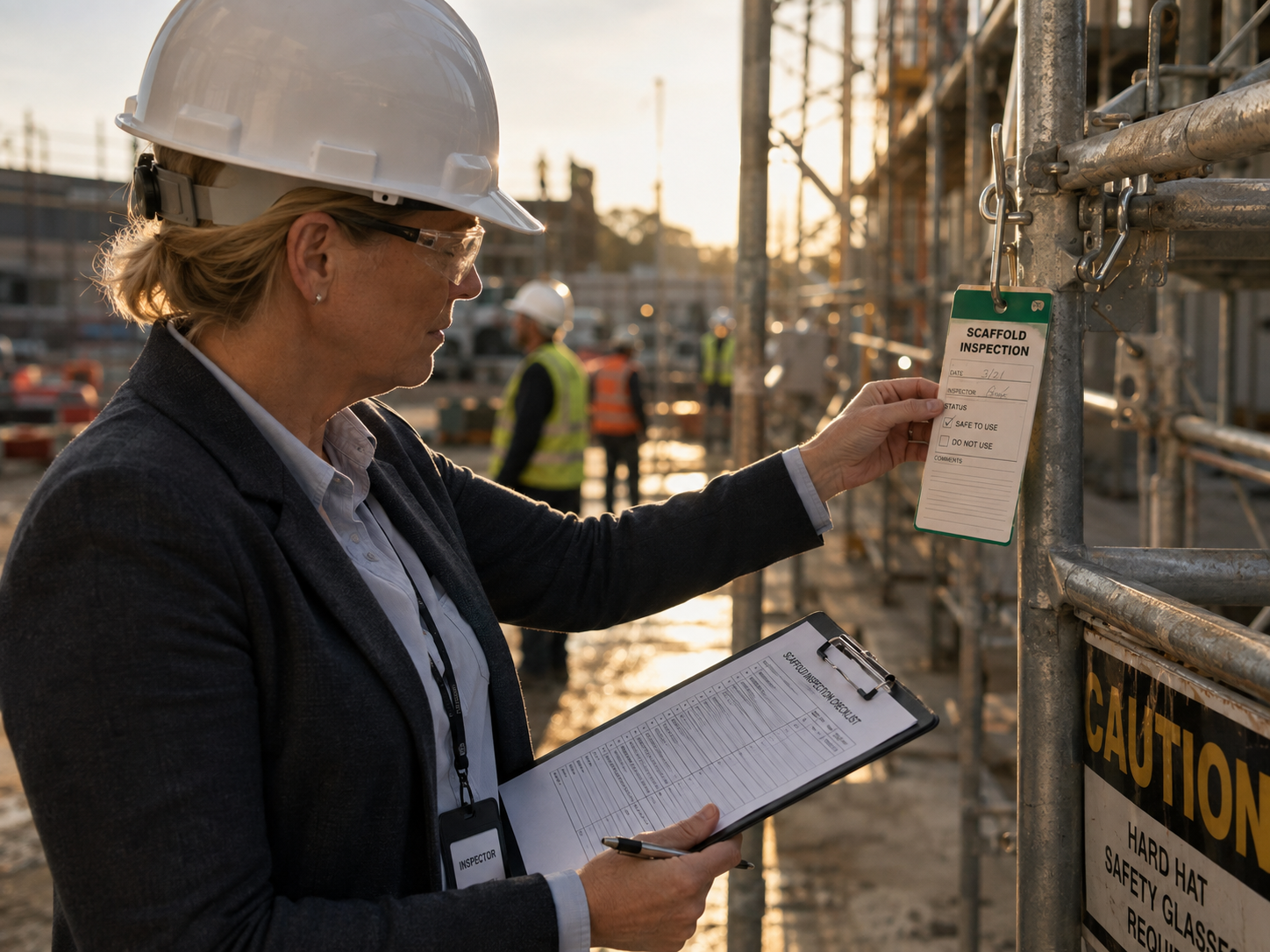
Recent outcomes span construction, agriculture, mining, manufacturing, energy and electrical trades. Regulators fined a NSW construction firm and its director a combined $205,000 after a worker fell six metres from unsafe scaffolding, and fined a WA mine operator $200,000 following a crush injury on an unguarded conveyor.
Notably, none of these prosecutions involved a novel hazard — each involved a control officers should reasonably have verified was in place, precisely the standard officer due diligence duties are designed to test.
Executive Summary
- What this blog covers: How the August 2026 penalty rise and enforcement surge change what regulators expect from WHS officer due diligence.
- Who it’s for: Australian company officers, PCBUs, HR and WHS leaders, and compliance teams responsible for demonstrating due diligence.
- Key regulatory context: The WHS Act 2011, Comcare’s 4% penalty increase effective August 3, 2026, and SafeWork NSW’s expanded inspectorate and self-assessment tools.
- The central risk: The diligence gap, where documented policies exist on paper but officers have not actively verified they work.
- Primary action required: Adopt a recurring, evidenced verification routine, such as the six-step framework below.
What WHS Officer Due Diligence Actually Requires
Due Diligence Is a Personal, Active Duty
Officer due diligence is a personal duty owed by individuals who hold significant influence over a PCBU’s operations, not a delegated task handed to a WHS manager. Under the WHS Act 2011, an officer must take reasonable steps to ensure the PCBU meets its own health and safety duties, a duty that cannot be outsourced.
Six Elements Define What “Reasonable Steps” Looks Like
Regulators assess due diligence against a consistent set of expectations rather than a single test. Specifically, they look for evidence that an officer actively engaged with WHS risk rather than passively receiving reports about it.
In practice, demonstrable due diligence typically covers:
- Acquiring and maintaining up-to-date knowledge of WHS matters relevant to the organisation’s operations
- Understanding the nature of the organisation’s operations and the hazards and risks generally associated with them
- Verifying that appropriate resources and processes exist to eliminate or minimise risk
- Confirming that processes exist to receive, consider and respond promptly to incident and hazard information
- Verifying that the PCBU complies with its duties, notification obligations and licensing requirements
Why This Distinction Matters More Than Ever in 2026
Officers who confuse having a policy with actively verifying it works are the ones regulators identify fastest, which is precisely why SafeWork NSW built its new self-assessment tools.
Moreover, the WA and SA prosecutions above both involved documented procedures that existed on paper without anyone actively verifying them in the field. Accordingly, the practical test now sits firmly on evidence of action, not intention.
Why Officer Due Diligence Gaps Keep Appearing
Officers Often Inherit Assurance They Never Tested
Many officers rely on assurances passed up from operational managers without independently verifying them, a pattern that rarely reflects bad faith so much as an unclear understanding of the duty itself.
- Board or executive papers that report WHS as a compliance percentage rather than a description of verified controls
- Site inspections conducted by middle managers but never reviewed at officer level
- Incident data presented in aggregate, obscuring recurring control failures at specific sites
- Training records treated as evidence of competence rather than as one input among several
Sector Assumptions Leave Genuine Risk Unmanaged
Officers in construction and mining tend to over-invest attention in physical hazards while under-investing in sectors seen as lower risk. However, Safe Work Australia’s sector data released on August 11, 2026 challenges that assumption directly, identifying body stressing, bullying and violence as prominent hazards affecting 2.3 million sales and service workers.
Indeed, due diligence duties extend well beyond the industries that traditionally dominate WHS headlines. This mismatch between perceived risk and actual risk profile is a recurring driver of what this guide later calls the diligence gap.
Resourcing Decisions Rarely Reach the Officer Level
Verifying that adequate resources exist is one of the six elements of due diligence, yet resourcing decisions are frequently made several layers below officer oversight. Common gaps include:
- WHS budgets set without officer sign-off on adequacy against current risk
- Psychosocial risk controls added late, after specialist inspectors or complaints prompt action
- Contractor and labour-hire arrangements excluded from the PCBU’s core risk review
- Investigation processes that exist on paper but lack a tested escalation path to officers
Consequently, officers who never test a budget or plan against real operational risk are exposed precisely where the WA and SA prosecutions occurred.
The Legal and Regulatory Context in August 2026
The WHS Act 2011 Sets a Personal Standard
The WHS Act 2011 imposes the officer due diligence duty directly on individuals, separate from the PCBU’s own duty to eliminate or minimise risk so far as is reasonably practicable, meaning an officer cannot rely solely on the PCBU’s compliance record as a defence.
Furthermore, the duty applies regardless of whether an incident actually occurs. Regulators can, and increasingly do, assess officer conduct against a notifiable incident, a near miss, or simply a proactive audit.
Regulator Activity Has Intensified Across Every State
Comcare, SafeWork NSW, WorkSafe Victoria and SafeWork SA have all taken visible action within the same month, signalling a coordinated national posture rather than an isolated state initiative. Specifically, August 2026 alone produced the following outcomes:
- NSW — regulators fined a construction firm and its director $205,000 combined after a six-metre scaffolding fall (August 11)
- WA — regulators fined a mine operator $200,000 after a contractor suffered a crush injury and fractured arm on an unguarded conveyor (August 14)
- SA — regulators fined a smallgoods company $90,000 for asbestos exposure during uncontrolled demolition (August 17)
- SA — regulators fined AGL Torrens Island $60,000 after unprotected cabling exposed five workers to lead during decommissioning (August 10)
- Victoria — regulators fined a crane company $100,000 after an unsecured pallet fell and caused a hospital roof collapse (August 12)
Two further prosecutions reinforce the pattern. Victoria fined an electrical company $40,000 for directing an apprentice onto a roof without fall protection on August 11, and NSW fined a farm owner $21,000 for operating an unguarded grain auger on August 17. In particular, the spread across construction, mining, energy, food processing and agriculture confirms that no sector sits outside the current enforcement focus.
Reasonably Practicable Now Carries a Higher Evidentiary Bar
“Reasonably practicable” has always required weighing the likelihood and severity of harm against the cost and availability of controls. Increasingly, however, regulators expect officers to show their working, not merely their conclusion.
Similarly, a notifiable incident investigation now routinely examines officer-level decisions alongside site-level failures, so the paper trail behind a resourcing or risk decision matters as much as the decision itself.
Leadership Behaviour That Regulators Actually Notice
Visible Verification Beats Signed Policies
Regulators consistently favour evidence of an officer verifying a control over evidence that a policy merely exists — site walk-throughs, direct questioning of workers, and independent review of incident data all carry more weight than a signed WHS policy alone.
- Officers who ask frontline workers directly about hazard reporting, rather than relying solely on manager summaries
- Board minutes that record specific questions raised about control effectiveness, not just risk ratings
- Scheduled, documented officer site visits tied to the organisation’s highest-risk activities
- Independent verification of contractor and labour-hire WHS arrangements, not a one-off onboarding check
Psychosocial Leadership Requires the Same Rigour as Physical Safety
SafeWork NSW’s decision to add five psychosocial-focused inspectors signals that leadership behaviour around bullying, workload and violence will be tested with the same rigour as scaffolding or machine guarding, so officers need visible engagement with psychosocial data, not just a policy statement.
- Regular review of psychosocial hazard reports alongside physical incident data, not in a separate silo
- Direct officer sponsorship of psychosocial risk assessments in high-exposure teams
- Clear escalation paths for bullying and violence reports that reach officer level within a defined timeframe
- Resourcing decisions that explicitly account for psychosocial control costs, not only physical hazard controls
Choosing the Right Training Partner Signals Genuine Commitment
Generic, off-the-shelf training modules rarely reflect an organisation’s actual policies, sites or workforce, which weakens an officer’s ability to demonstrate genuine engagement with real risk. By contrast, training built around an organisation’s own procedures and hazard profile, backed by decades of instructional design experience and delivered without annual subscription lock-in, gives officers something concrete to point to when a regulator asks how competence was verified.
The Diligence Gap: Paper Compliance vs Demonstrable Diligence
Defining the Diligence Gap
The diligence gap describes the distance between paper compliance, meaning documented policies and signed-off procedures, and demonstrable due diligence, meaning active, evidenced verification that those procedures work in practice. Paper compliance answers “does a policy exist?” Demonstrable due diligence answers a harder question: “has an officer verified that the policy is followed, resourced and effective?”
Every prosecution cited in this guide sits inside that gap. A scaffolding procedure, a conveyor guarding standard and an asbestos removal protocol all existed on paper, yet nevertheless, no officer had actively tested any of them against day-to-day operational reality. That is the gap regulators are now built to find.
Signals That the Gap May Be Open in Your Organisation
Officers can spot an open diligence gap by watching for a handful of recurring warning signs, none of which require a formal audit to detect:
- WHS reporting to officers consists mostly of lagging indicators, such as incident counts, rather than leading indicators of control effectiveness
- No officer has personally observed the highest-risk activity in the organisation within the past twelve months
- Contractor and labour-hire WHS performance is assumed rather than independently verified
- Training completion rates are reported without any assessment of whether the training reflects actual site conditions
Closing the Gap Is a Continuous Discipline, Not a One-Off Project
Closing the diligence gap is not a single audit completed once and filed away. Instead, it requires a recurring rhythm of verification that keeps pace with changing operations, new hazards and evolving regulatory expectations.
SafeWork NSW’s new self-assessment resources offer a useful starting point, and used quarterly rather than annually, they give officers a structured way to test whether paper compliance still matches operational reality.

The eCompliance Central Officer Due Diligence Framework
Closing the diligence gap requires a repeatable method rather than good intentions. The following six-step framework translates the WHS Act’s due diligence elements into practical actions an officer can complete, document and repeat every quarter.
A Six-Step Framework for Control
Verify Resourcing Directly
Review budgets and staffing against actual site risk yourself, rather than accepting a summarised assurance from operational management.
Stay Current on Hazards
Set a recurring schedule to review sector-specific hazard data, including Safe Work Australia releases, so emerging risks in your industry reach officer attention quickly.
Walk the Operation Personally
Schedule direct site visits to your highest-risk activities at least quarterly, and ask frontline workers about hazards in their own words rather than relying solely on reports.
Test the Reporting Pathway
Confirm that incident and hazard reports genuinely reach officer level within a defined timeframe, then trace one report end-to-end to check the pathway actually works.
Audit Compliance, Don’t Assume It
Independently verify that the organisation meets its licensing, notification and duty obligations, including for contractor and labour-hire arrangements.
Review and Document Every Quarter
Record what you verified, what you found, and what changed as a result, so the organisation can demonstrate an active pattern of diligence rather than a single retrospective claim.
Turning the Framework Into a Recurring Habit
None of these six steps demands specialist WHS qualifications; they demand consistent officer attention. Applied quarterly and documented consistently, they give an officer a defensible, evidenced answer whenever a regulator, an insurer or an inspector asks how due diligence was actually exercised.
The Real Cost of an Unverified Due Diligence Gap
Financial Penalties Are Only the Starting Point
The corporate penalties are substantial on their own, reaching $17.72 million for Category 1 offences. However, the financial exposure for individual officers can include personal fines, and no insurance policy or indemnity arrangement can cover a criminal conviction.
Beyond the fine itself, a serious WHS failure typically triggers a predictable chain of consequences:
- A notifiable incident investigation that examines officer-level decisions, not just site-level actions
- Reputational damage that affects tendering, insurance premiums and stakeholder confidence
- Increased regulator attention on the organisation for an extended period following the incident
Enforcement Trends Point Toward Sustained Scrutiny
Seven separate prosecutions across four jurisdictions within a single month is not a statistical anomaly; it reflects a deliberate national enforcement posture that organisations should expect to continue rather than ease once August’s headlines fade. In addition, SafeWork NSW’s expanded inspectorate, including specialist psychosocial inspectors, shows enforcement capacity growing alongside enforcement intent.
Compliance Intelligence: Key Insights
Key Takeaways
- Treat officer due diligence as a personal duty, not a delegated administrative task.
- Use SafeWork NSW’s self-assessment resources quarterly, not just once.
- Verify psychosocial hazard controls with the same rigour applied to physical hazards.
- Trace at least one hazard report end-to-end each quarter to test the reporting pathway.
- Independently confirm contractor and labour-hire WHS compliance rather than assuming it.
- Document every verification activity so officers can demonstrate due diligence, not just claim it.
- Choose training built around your organisation’s actual policies and hazards, not generic content.
Frequently Asked Questions
Officer Obligations and Penalties
What is officer due diligence under the WHS Act 2011?
How much did WHS penalties increase in 2026?
Can a WHS officer be personally fined?
Practical Compliance and Assessment Steps
How do I know if my organisation has a WHS due diligence gap?
Does officer due diligence apply outside high-risk industries like construction and mining?
What should a PCBU look for in a WHS training provider?
Build WHS Due Diligence Your Officers Can Actually Demonstrate
Generic training leaves officers guessing when a regulator asks how due diligence was verified. eCompliance Central builds SCORM-ready, fully customised WHS modules around your organisation’s own policies, people and operational realities, so your officers have real evidence, not just a certificate.
Explore Custom Compliance Solutions
Looking for a broader overview?
Read our definitive Australian Workplace Compliance Guide.